

Smart Ring vs Smartwatch: Why Tech Users Are Ditching Screens
For the past decade, the smartwatch has reigned supreme as the ultimate wearable device. From tracking workouts to displaying instant notifications, having a miniature computer strapped to your wrist seemed like the peak of human convenience. However, a quiet revolution is taking place in the consumer tech space. A growing number of tech enthusiasts, minimalists, and health-conscious consumers are abandoning their glowing wrist screens in favor of something much more discreet: the smart ring.
When evaluating the smart ring vs smartwatch debate, the core question is no longer just about what features you want on your body. Instead, it is a lifestyle choice between constant connectivity and distraction-free wellness. Here is why modern tech users are making the switch and ditching screens for good.
The Rise of Screen Fatigue

We are a society drowning in screens. Between smartphones, laptops, tablets, and TVs, the average adult spends up to eleven hours a day staring at digital displays. For many, the smartwatch became an extension of this digital overload rather than a solution to it. Instead of escaping notifications, users found their wrists vibrating constantly with emails, news alerts, and social media pings.
The transition to a smart ring represents a desire for "ambient technology." Devices like the Oura Ring, Samsung Galaxy Ring, and Ultrahuman Ring Air collect incredibly precise biometric data without demanding your visual attention. By removing the screen, these devices allow users to remain present in their daily lives while still gathering critical health metrics in the background.
In-Depth Health and Sleep Tracking

When comparing the biometric capabilities of a smart ring vs smartwatch, form factor plays a massive role in accuracy and comfort. Smart rings are widely considered superior for sleep tracking for several reasons:
- Consistent Contact: The blood vessels in your fingers are closer to the surface than those in your wrist, allowing optical sensors in a ring to get a highly accurate and consistent reading of your heart rate, heart rate variability (HRV), and blood oxygen levels.
- Unmatched Comfort: Wearing a bulky, metallic smartwatch to bed can be uncomfortable and disruptive to sleep. A lightweight smart ring is virtually unnoticeable overnight.
- Focused Data: Instead of checking your wrist the moment you wake up to see a barrage of missed notifications, smart ring companion apps allow you to view your sleep and readiness scores on your phone only when you are ready to start your day.
Battery Life That Actually Lasts
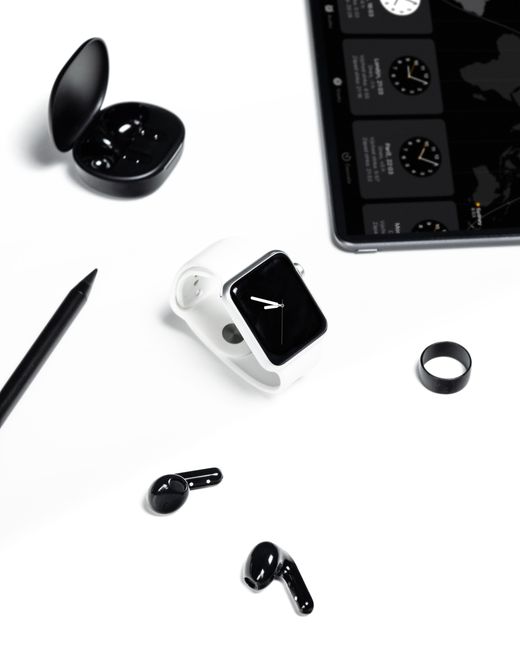
One of the biggest pain points of owning a modern smartwatch is the dreaded daily charge cycle. Most full-featured smartwatches, such as the Apple Watch or Samsung Galaxy Watch, require charging every 24 to 48 hours. This constant need for a charger limits their effectiveness as 24/7 health monitors.
Smart rings, by virtue of having no power-hungry pixel displays, boast exceptional battery life. Most smart rings on the market can run continuously for five to seven days on a single charge. Charging them takes less than an hour, meaning you rarely have gaps in your health data tracking.
Smart Ring vs Smartwatch: The Ultimate Pros & Cons
To help you decide which wearable aligns with your lifestyle, let us look at the direct trade-offs between a smart ring vs smartwatch.
| Feature Category | Smart Ring Pros | Smart Ring Cons | Smartwatch Pros | Smartwatch Cons |
|---|---|---|---|---|
| Design & Comfort | Lightweight, ultra-discreet, looks like traditional jewelry. | Sizing is permanent; cannot be adjusted easily. | Highly customizable bands and digital watch faces. | Bulky, can be uncomfortable to wear during sleep. |
| Battery Life | Lasts 5 to 7 days on a single charge. | Charging cases are proprietary and easy to lose. | N/A (Generally poor battery life). | Requires charging every 1 to 2 days for most models. |
| Active Workouts | Good for passive tracking (heart rate, steps). | Heavy lifting can scratch the ring; no real-time GPS. | Real-time pacing, GPS route tracking, and instant music control. | Can feel heavy during high-intensity workouts. |
| Notifications | Zero screen distractions; focus on the physical world. | No way to read texts, take calls, or see app alerts. | Full notification access, quick replies, and voice assistants. | Constant buzzing contributes to digital anxiety and fatigue. |
The Verdict: Which Wearable Belongs on Your Body?
The shift toward screenless wearables highlights a broader cultural trend: the desire to disconnect without losing the benefits of modern technology. If you are someone who needs real-time GPS mapping during outdoor runs, relies on wrist-based phone calls, or prefers having instant access to your calendar, the classic smartwatch remains your best bet.
However, if you are experiencing notification burnout, want to optimize your sleep and recovery with medical-grade accuracy, and prefer a device that blends seamlessly into your personal style, the smart ring is the clear winner. By shifting the focus from constant connectivity to passive, ambient health tracking, smart rings are proving that sometimes, the best tech is the tech you forget you are even wearing.